Black Dread Font: Bold, Dramatic Display Type for Handmade Brands
If you’ve ever spent hours tweaking a label design only to realize the font lacks presence—or watched a sticker mockup fall flat because the typeface feels too safe—you know how much weight the right display font carries. Black Dread isn’t just another decorative typeface. It’s a deliberate, unapologetic statement—a hardcore, twisted display font built for impact, mood, and memorability. As someone who hand-presses boutique tags, cuts vinyl for farmhouse signs, and designs printable wall art for indie shops, I reach for Black Dread when I need texture, tension, and authenticity—not just decoration.
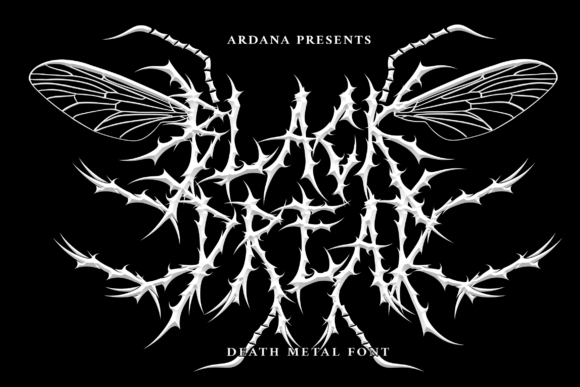
Visually, Black Dread balances sharp angularity with organic distortion. Letters lean, fracture, and echo like ink bleeding under pressure—never chaotic, always intentional. It’s not “scary” in a cartoonish way; it’s dramatic, cinematic, deeply atmospheric. That makes it surprisingly versatile across handmade product categories where emotional resonance matters: gothic wedding welcome boards, small-batch candle labels (“Midnight Myrrh,” “Ash & Ember”), limited-edition greeting cards for alternative birthdays or Day of the Dead celebrations, and even boutique apothecary packaging that leans into mystery rather than minimalism.
For physical product use, readability at scale is non-negotiable—and Black Dread delivers where it counts. It shines best at larger sizes: 24pt and up on printed cards, 36pt+ on wooden signs, and 48pt+ for vinyl-cut tote bag slogans or mug decals. On Cricut or Silhouette machines, I always convert outlines before cutting—especially for intricate letterforms like the hooked terminals in “B” or “D.” At smaller sizes (under 16pt), avoid using it for fine print or ingredient lists; reserve it for headlines, names, titles, and short decorative phrases. Think “Witchcraft Co.” on a kraft paper tag—not full paragraphs on a product insert.
I’ve used Black Dread across dozens of real projects: a set of printable planner pages for tarot readers (paired with a clean sans serif for headers and body text), seasonal SVG bundles for Halloween-themed iron-on transfers (layered over distressed textures for depth), and even custom bakery boxes for a local black-owned café launching a “Shadow Brew” cold brew line. In every case, customers commented on how the font made the product feel *intentional*—like it had its own voice, not just visual flair. That perceived quality lifts perceived value, especially in markets where handmade equals meaning.
Pairing is where Black Dread truly unlocks commercial flexibility. Its intensity demands contrast—not competition. I most often pair it with a relaxed handwritten font for subheadings or quotes (think chalk-style script for “Hand-Poured • Small Batch”) or a crisp, neutral sans serif like Montserrat or Inter for supporting text, pricing, or care instructions. For vintage-leaning stationery, a subtle serif like Playfair Display adds elegance without softening the edge. Avoid pairing it with other high-contrast or ornate display fonts—let Black Dread lead, then support with clarity.
As a PUA-encoded font, Black Dread includes full glyph access for alternates and stylistic sets—meaning you can swap in more aggressive swashes or tighter ligatures depending on your layout needs. That’s invaluable when designing SVG files for layered vinyl or creating multi-color digital printables where letter spacing and visual rhythm affect production flow. While it doesn’t include extended Latin or Cyrillic multilingual support, its core character set covers English, Western European, and common punctuation needed for most craft-based labels, tags, and social media graphics.
Practically speaking, I keep Black Dread in three go-to folders: one for SVG-ready outlines (converted in Illustrator), one for web-optimized WOFF2 files when building digital download previews, and one for print PDFs where I embed the font to preserve fidelity across devices. File formats matter—always verify your license includes OTF and TTF for maximum compatibility across Canva, Affinity Designer, Cricut Design Space, and Procreate workflows.
Licensing is where many crafters stumble. Yes, Black Dread is a commercial font—but “commercial use” means different things depending on your business model. If you’re selling physical products (mugs, stickers, shirts) with Black Dread as part of the design, you’re covered under standard licensing. If you’re selling editable templates, SVG cut files, or digital printables where buyers can change the text themselves, double-check that your license permits *end-user editing*. Most premium display fonts—including Black Dread—allow this, but always confirm before listing on Etsy or Gumroad. When in doubt, contact the foundry directly. It’s faster than a takedown notice.
What sets Black Dread apart from other “edgy” display fonts is its restraint within rebellion. It doesn’t scream—it looms. That makes it ideal for brands that want distinction without gimmickry: a ceramicist signing pieces with a stark, elegant monogram; a herbalist branding dried botanical bundles with quiet intensity; a stationery designer crafting wedding suites for couples who love Tim Burton films but hate clichés. It works because it feels human-made—not algorithmically distressed.
Whether you're laser-engraving wooden gift tags, screen-printing band tees for local shows, or bundling printable holiday cards for digital download, Black Dread gives your work gravity. It tells customers, without saying a word, that this wasn’t mass-produced—it was chosen, considered, and crafted with care. And in a marketplace flooded with safe, generic type, that kind of intentionality is your strongest design asset.